

OUR BLOGS
Beyond the Book - More Caregiving Guidance from Start to Finish

You Don’t Have to Do This Alone
When caring for an aging parent, your support team should include a minimum of seven types of support: a legal advisor who specializes in elder law, a CPA or tax advisor familiar with long-term care finances, a coordinated healthcare team, engaged family members, trusted friends, a community support group, and professional caregivers when the time comes. No single person — no matter how capable or devoted — can successfully manage all dimensions of elder care alone.

Technology for Your Aging Parents
With my mom’s approval, I installed a camera in her room to monitor visitors and activities. I also provided her with an iPhone and an iPad, which became invaluable tools for communication, connection, monitoring, and entertainment. In addition, I set up a banking application on her phone to access her funds.

Select the Right Living Option to Protect Your Parent’s Health & Safety
Selecting the right living option for an aging parent requires matching your parent’s specific needs — physical, cognitive, financial, and social — to the care setting best equipped to meet them. The options range from in-home care to various types of residential care facilities, and deciding where your parent will live is deeply personal. But with a clear understanding of your parent’s needs and the available options, you can make an informed choice.
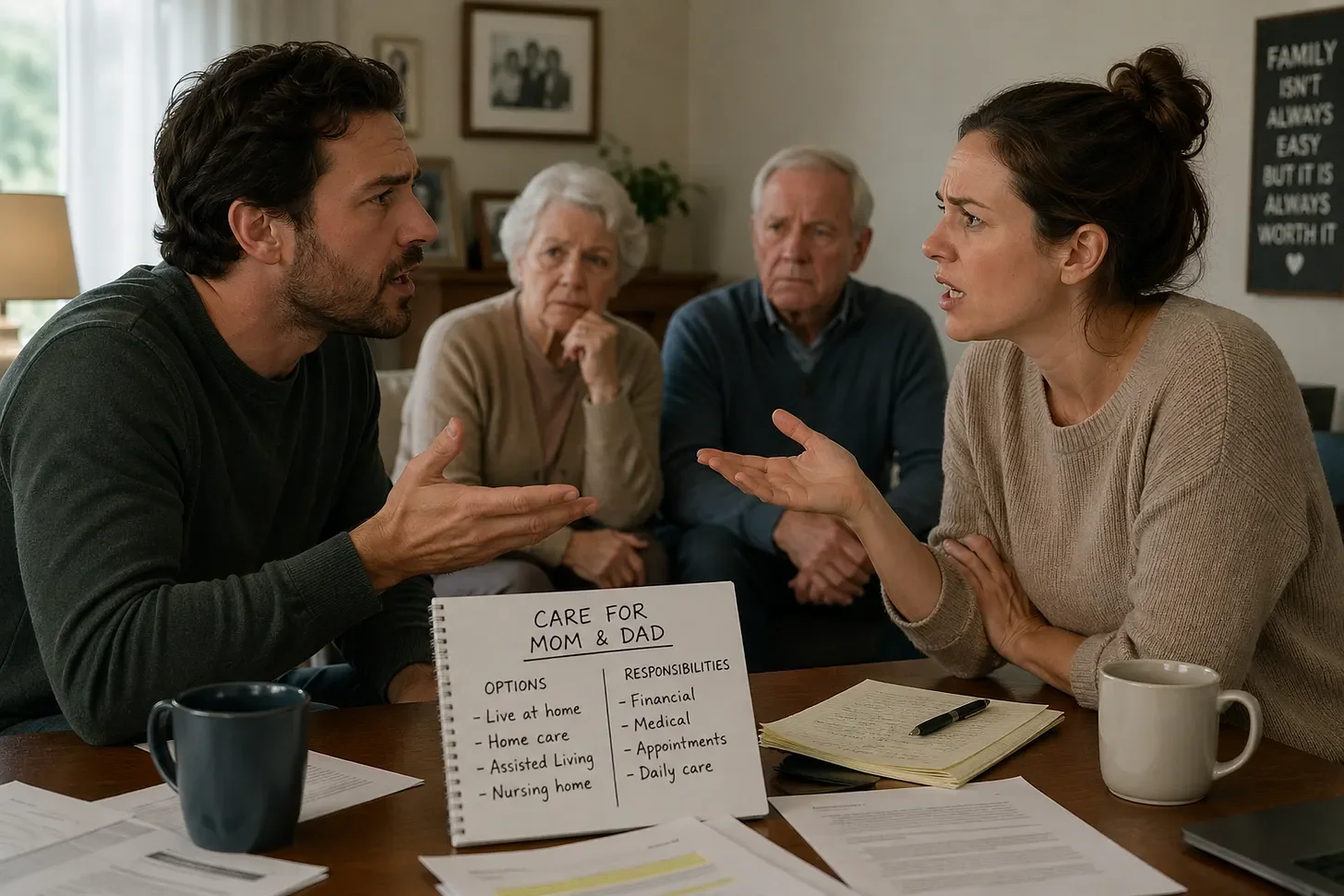
Sibling Rivalry
Perhaps the most painful disagreements come at the end. End-of-life decisions — whether to pursue aggressive treatment, not try to save the family member when the outcome is hopeless (typically done with a Do Not Resuscitate Order (DNR)), when to consider hospice, what Mom really meant when she said she “didn’t want to be a burden” — these are conversations that cut to the very core of love, loss, and what we believe it means to do right by someone.

Watch Out: Don’t Lose Yourself
When a child feels that they are the only person who can care for their parent and no one else is capable, including a sibling, they are actually doing their parent and siblings a tremendous disservice… I have witnessed this scenario more than once, and it seems that no one wins in these cases, especially the caregiver who sacrifices their health and well-being to care for their aging parent.

Did You Know? Older Men are Lonelier than Older Women
As a man, I was raised with traditional notions of masculinity - restraining my emotions, and learning to be a self-starter and self-reliant. However, these traits often hinder men from expressing vulnerability and sharing feelings, making it very difficult to seek help or connect deeply with others.

Caring for Others
Aging can be a slow process, until it isn’t. Once your parent or other loved one begins to decline, the rate of the decline can be exponential. One day, they’re going to the theatre, and within months, they are struggling just to get in and out of a car.

Maintaining Stress Free Life Balance After 50
As we age, it becomes increasingly more important to maintain a healthy work-life balance. Our bodies are slightly less resilient, and our mental fitness may be declining. There is still time to “turn around” declining health through diet, exercise, and mental stimulation. Here are a few ideas: