

OUR BLOGS
Beyond the Book - More Caregiving Guidance from Start to Finish

Should I Take Away My Parent’s Car Keys?
My sister-in-law’s phone rang one afternoon, and it was my mother-in-law’s neighbor. “I just saw your mom heading out in the car,” she said, in the careful, uncertain tone of someone who isn’t sure if she’s about to deliver good news or bad. It was bad news. My husband and I had taken his mother’s car keys away weeks earlier, and just to be sure, my husband had gone one step further and disconnected the car battery himself. We thought that settled it.

Is My Aging Parent Addicted to Doom Scrolling on Social Media?
When I first started watching my mother using her phone, I assumed she was just texting, checking the weather, or maybe the news headlines. One day, I actually watched her sliding and tapping her finger across the screen, scrolling through a feed of videos, photos, and text messages with the speed and confidence of someone half her age. She’s 95.

Health Insurance for Senior Expats
For years, people have tossed around the idea that it’s cheaper to take endless cruises than to pay for the high cost of senior living. Lately, though, it’s no idle daydreaming. A growing number of Americans — of every age, not just retirees — are seriously exploring life abroad. When they begin researching their options, healthcare and health insurance are often the concerns that keep people from pulling the trigger.

Should I Be Worried About Medicare?
If you’ve read the back-and-forth headlines about Medicare cuts this summer and felt worried, you’re not imagining things. Make no mistake, changes are coming. But here’s the catch: most of what’s about to change won’t show up in anyone’s mailbox until after this November’s midterm elections. So, you won’t feel the changes until after you cast your vote. The Republicans planned it that way.

Should I Use AI to Care for My Aging Parents?
Have you ever typed a symptom into a chatbot at 11:00 PM because your mother just called to complain about an ailment, and you couldn’t get her doctor on the phone? If so, you’re not alone — and you’re part of a rapidly growing group of caregivers who are turning to AI tools for help. …AI is available at 2:00 AM when a human is not. Beware, however, that even the tools that promise to make your overwhelming job easier, AI comes with trade-offs worth understanding before you lean on it.

How Do I Find a Home for My Mom?
There comes a time when every adult caring for an elderly parent starts asking the question none of us want to ask: is it time to put mom in a “home”? Maybe your question is broader — “How do I choose the right living arrangement for my aging parent?” Or maybe you’ve already answered that one, and you’re stuck on the next: “How do I actually find an assisted living facility?” I was in the second camp. I knew assisted living was right for my mother.

A Silent Struggle: Mental Health in Older Men
Ask any older man how he’s doing, and he’ll almost certainly wave his hand and say, “I’m fine.” I should know. I’m one of them. That single phrase carries decades of conditioning — a lifetime of being told that strength meant silence, that need was weakness, and that the weight of the world was ours to carry without complaint.

It’s My Money. Leave It Alone.
Yes, you almost certainly need Power of Attorney for your aging parent — both a financial POA and a healthcare POA. You need this before a crisis forces the issue. You will more than likely get resistance from your parent: “I don’t need that. I’m fine. My mind is still working.” A POA lets a trusted person step in to manage money or make medical decisions if your parent can’t, without a judge getting involved. You may need to remind your parent that “anything can happen” at any time, and that this is a protective measure, while they are still capable of giving their input. It can be as broad or as limited as your parent wants, which means “giving someone POA” and “losing control of your life” are not the same thing, no matter what your parent believes.

What Should I Do When My Parent Can’t Hear Me (Or Speak My Language)
If you’ve ever typed “what should I do if my elderly parent is hard of hearing” or “how do I find a caregiver who speaks my parent’s language” into a search bar at 11:00 p.m., you’re not alone, and you’re in the right place. This is perhaps one of the most common — and most under-addressed — challenges in caring for aging parents. Here’s what I learned, the hard way, over twenty years.

Caring for a Parent with Dementia or Alzheimer's Disease
The strongest emotion you are likely to experience is grief, as you watch your parent become a different person from the one they used to be. And it is one of the most quietly devastating experiences a family can face. There is no way to begin to describe the emotion you might experience when your own mother or father doesn’t know who you are.

Caring for the Caregivers. Who Is Taking Care of You?
You know when the medication needs to be refilled before the pharmacy even sends a reminder. You’ve memorized the names of every specialist, every diagnosis, every appointment time. You’ve rearranged your schedule, your sleep, your finances, and in many cases your entire sense of self — all in service of someone you love.
But here’s the question nobody seems to be asking:
Who is taking care of you?

When is it Time To Take Away Your Parent's Credit Cards?
Once your parent gets to be a certain age, it does become the same as having younger children whose credit card activity has to be monitored. Taking away credit cards is much like taking away car keys. To your parent, it is a loss of independence, and very threatening, especially as they are likely already feeling a loss of control, and an inability to do a variety of things that used to be no-brainers. When it comes to credit cards, of course, you don’t need to remove them entirely, but consider putting controls in place.

What Happens When There’s No Money Left to Pay for Care?
You have an elderly parent who needs more long-term care than you can provide. You find out that the required costs are enormous when you’re trying to cover home help or a facility for a parent. Thirty dollars an hour for a caretaker adds up fast, not to mention assisted living that can run from $5,000 to $10,000 a month. Most families just do not have that sitting around. So, what can you do when the money runs out or never quite existed in the first place?

Understanding Your Aging Parent's Emotional Journey
While you are on this challenging journey, your aging parent is also facing not only many physical (and perhaps cognitive) challenges, but also significant emotional challenges of his or her own. These challenges can be caused by the loss of independence or certain physical capabilities, cognitive decline (perceived or actual), exhaustion from chronic pain and ever-expanding physical issues, isolation, loss of family and friends, depression, grief, and fear of what is yet to come.

Medical Fraud
Medical fraud drains tens of billions of dollars from the American healthcare system every year. And despite what many people assume, insurance companies aren’t the only ones paying for it. Premiums go up, and unexpected bills arrive due to medical fraud. In some cases, your actual medical care gets put at risk. This problem is important to understand — because knowing what to look for can save you money, and possibly a lot more than that.

Why is a Nigerian Prince Calling Me?
When my mother-in-law received a phone call letting her know that she had won a million dollars from Publishers’ Clearing House, she was elated. She had been regularly mailing in responses to invitations received, and now she had actually won. She was proud of herself for getting rewarded for her efforts. She knew that she would one day be rewarded for all those envelopes she put into the mail whenever Publisher’s Clearinghouse contacted her.

One Sibling Shouldn't Have to Carry It All
First, one sibling starts to do more, typically the sibling who lives closest. As time goes by, they begin to do more and more. When multiple siblings live close, it seems to fall to the sibling with the more flexible job, or the historically responsible sibling. No one really talks about it, and it is often too late by the time it is finally discussed.
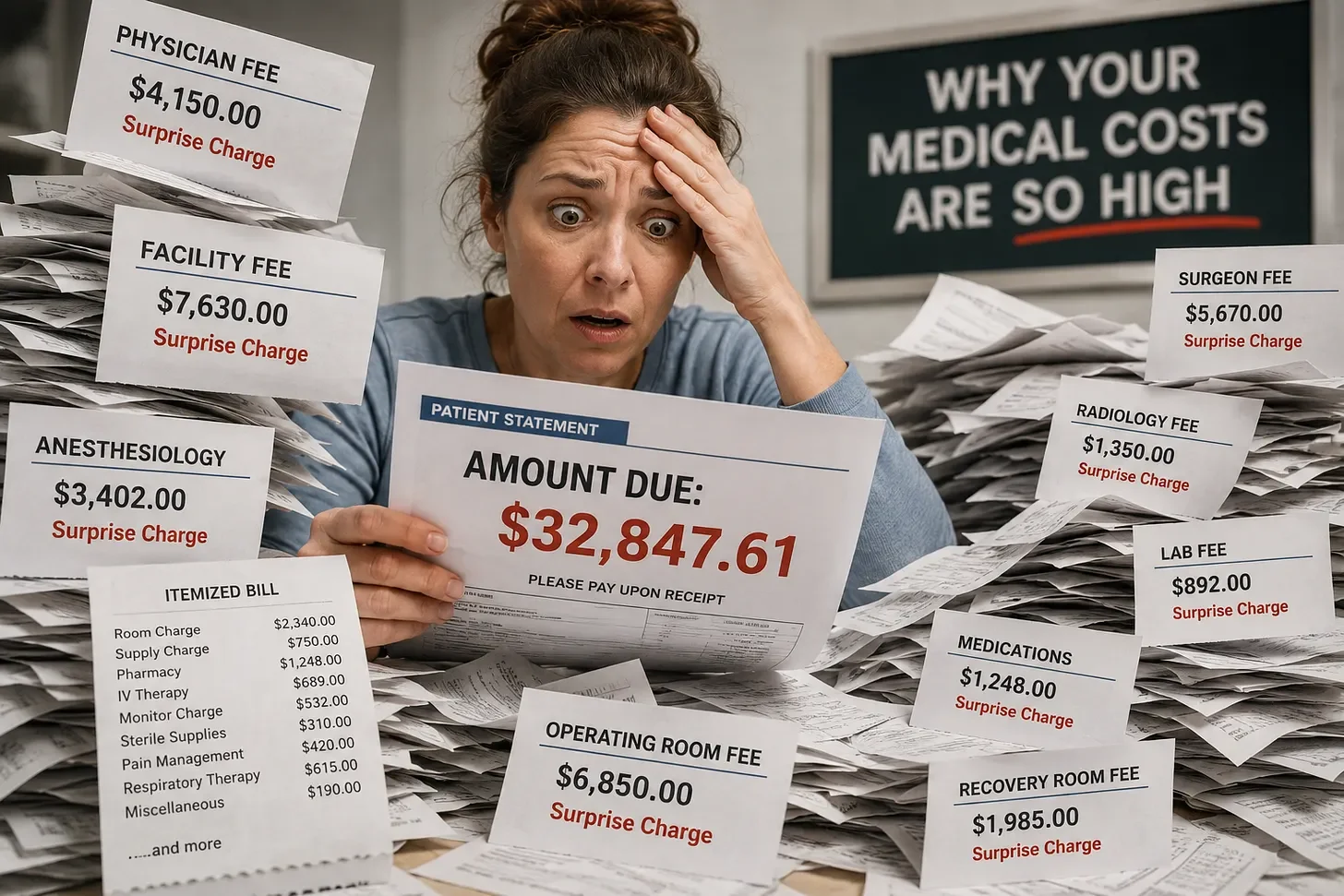
Why Your Medical Costs are So High
You did everything right. You picked a plan during open enrollment. You checked that your doctor and/or hospital was in-network on your plan. You even called ahead to confirm your procedure was covered. And then — weeks later — an envelope arrived that made your stomach drop. Sound familiar? You’re not alone.

Is it Time to Step In?
It is time to step in and assist an aging parent when you notice consistent changes in their ability to manage daily tasks — bathing, eating, dressing, medications, finances, or mobility — or when you observe meaningful shifts in their cognitive function, mood, emotional well-being, or physical condition. No single sign is definitive. What matters is a pattern of change from how your parent previously functioned.

Caring for Your Parents is Not Political
Even if your parent is not on Medicaid, Medicaid cuts affect everyone. To fully grasp this, it’s important to understand how hospitals and care facilities are funded. While Medicare is regulated federally, Medicaid shares regulation and management between the federal government and the state. When Medicare does not cover all the costs of a facility, Medicaid often offers supplemental reimbursement. Most hospitals accept and rely on Medicare reimbursement, and some depend on Medicaid reimbursement as well.